
Design Proposals
The Metaverse enables new forms of social interaction, communication, and digital participation. At the same time, immersive technologies, virtual environments, and sensor-based systems introduce new challenges and risks for users. Many situations in the Metaverse differ fundamentally from those in traditional digital applications, as interactions are more immersive, embodied, and occur in real time. This gives rise to new issues, for example regarding the handling of personal data, automated systems, harassment, and the transparency of digital processes. The following examples illustrate some of the challenges that may arise in the Metaverse and present potential design approaches to support safer, more transparent, and user-centred experiences.
Beyond optional recommendations for designing privacy-friendly Metaverse environments, there are also legal requirements for protecting privacy that must be complied with. This website provides an overview of these legal requirements alongside the proposed design approaches in the form of evaluation metrics for privacy-friendly Metaverse environments.
Problem: intensity of data collection
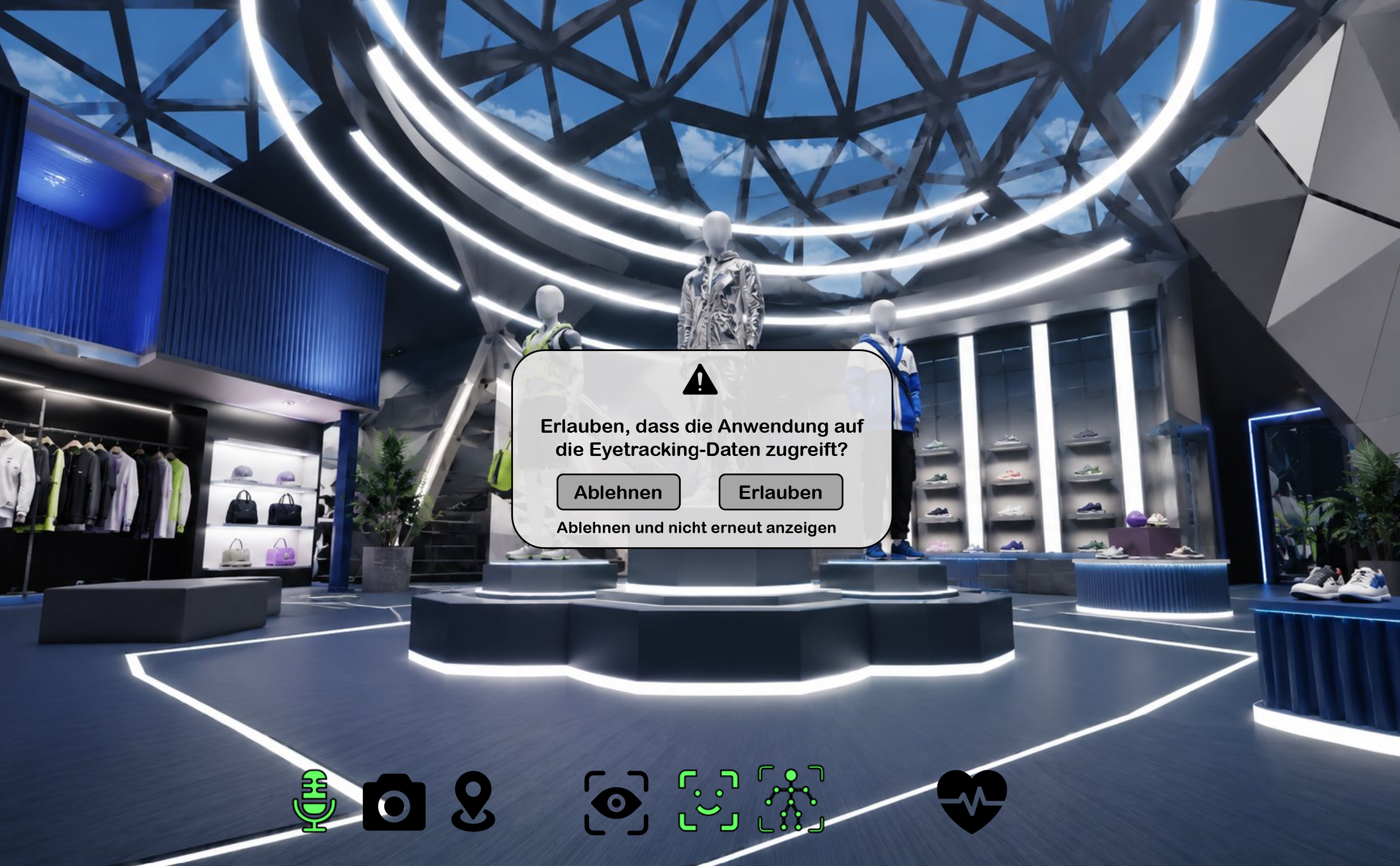
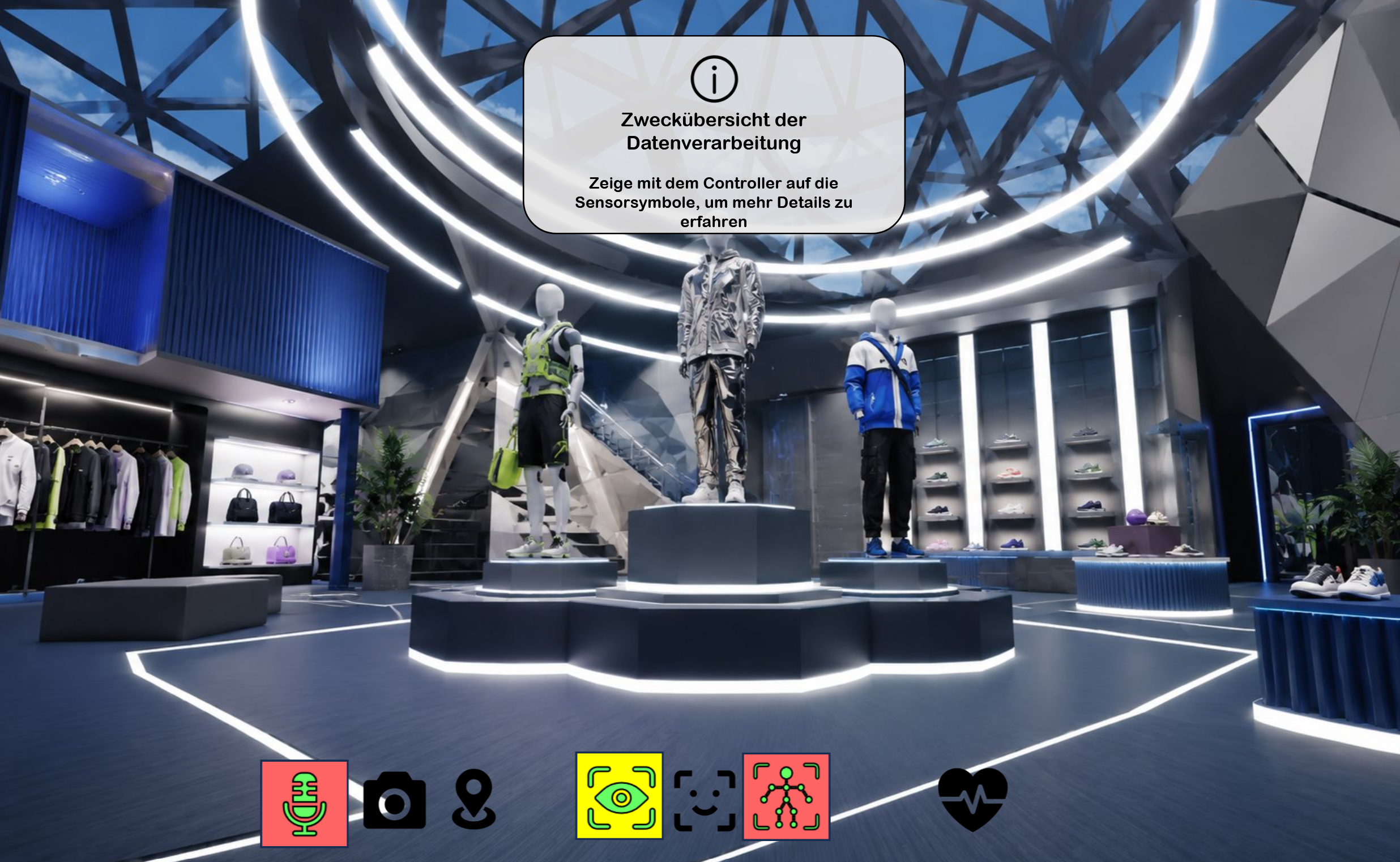
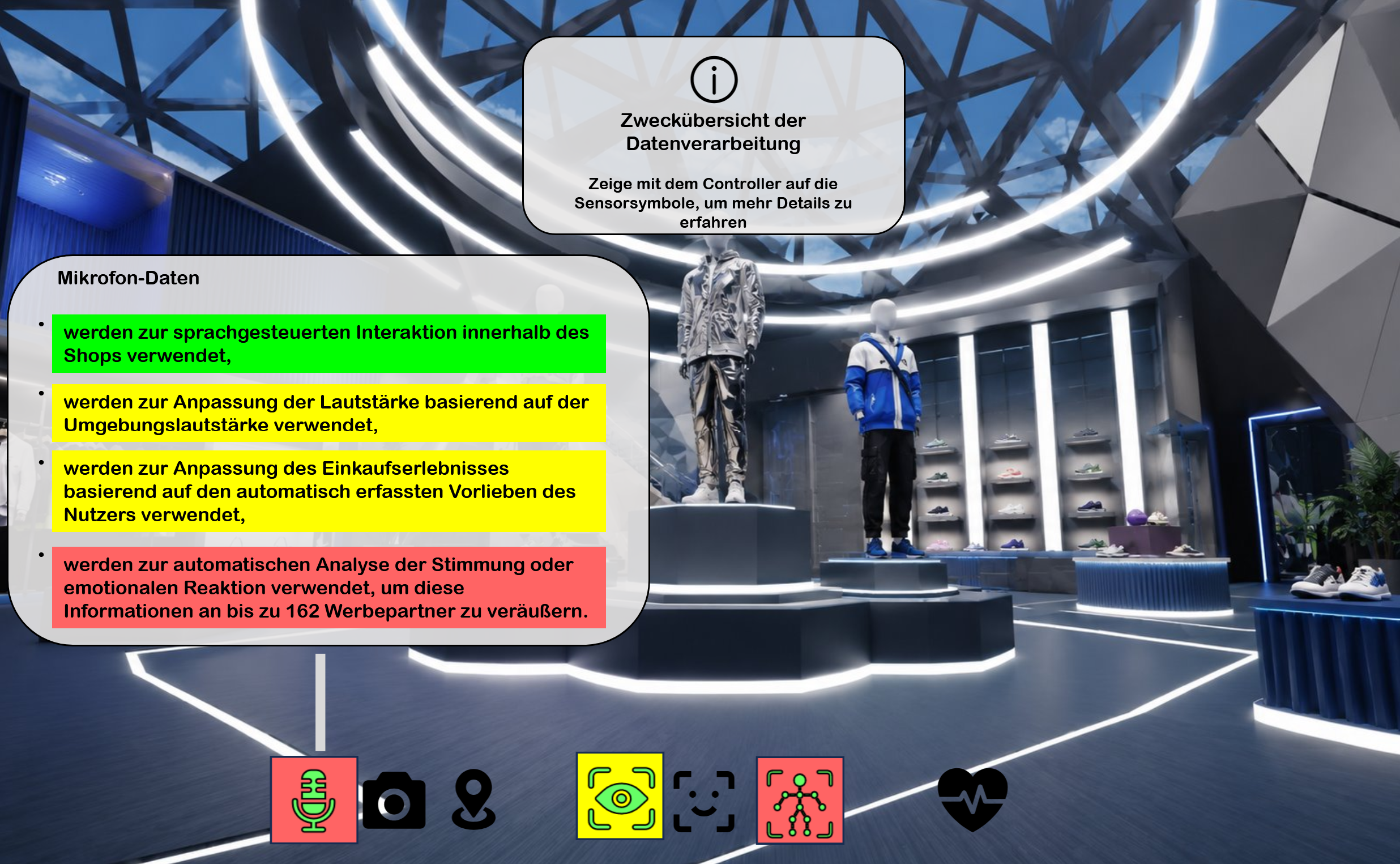
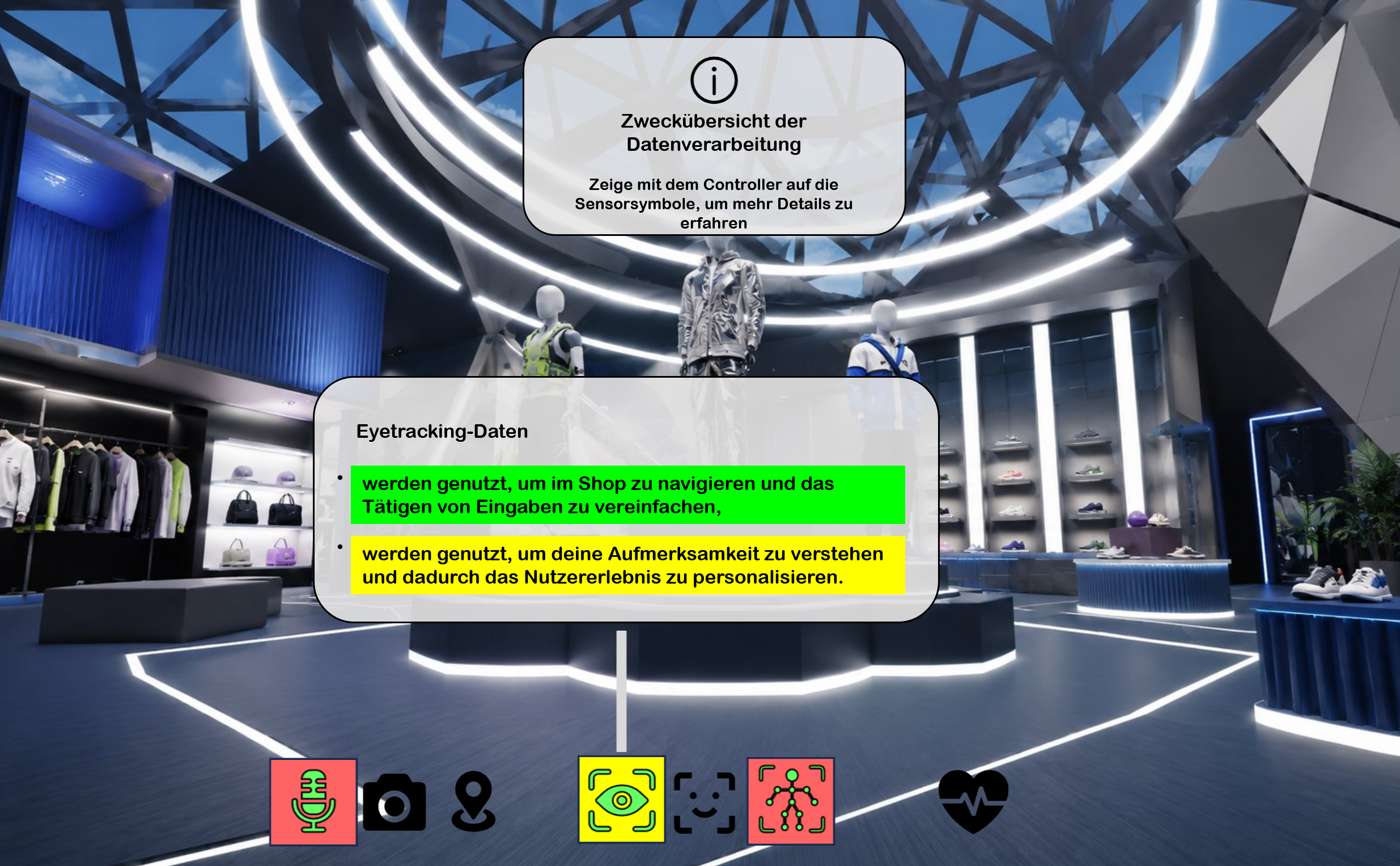
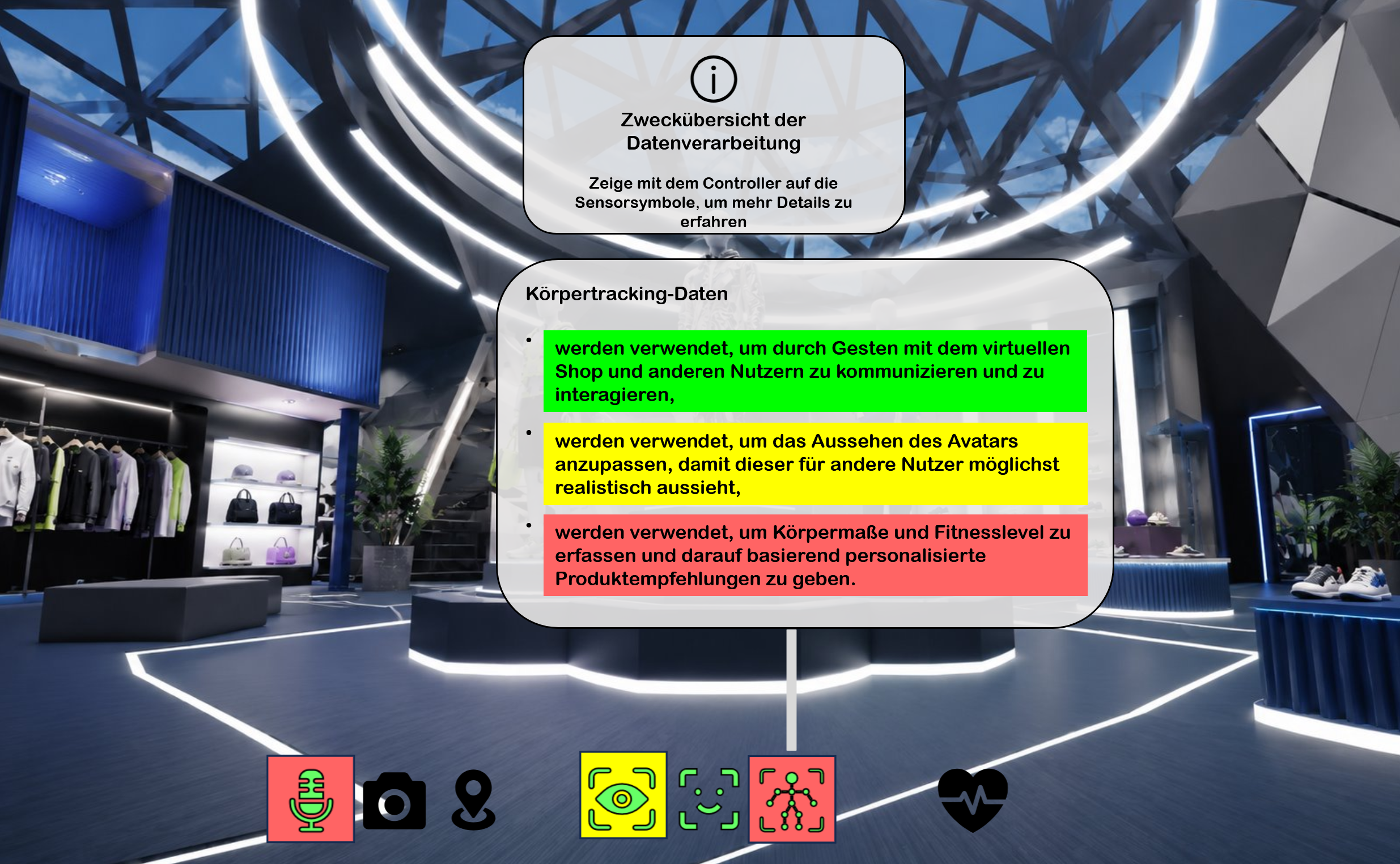
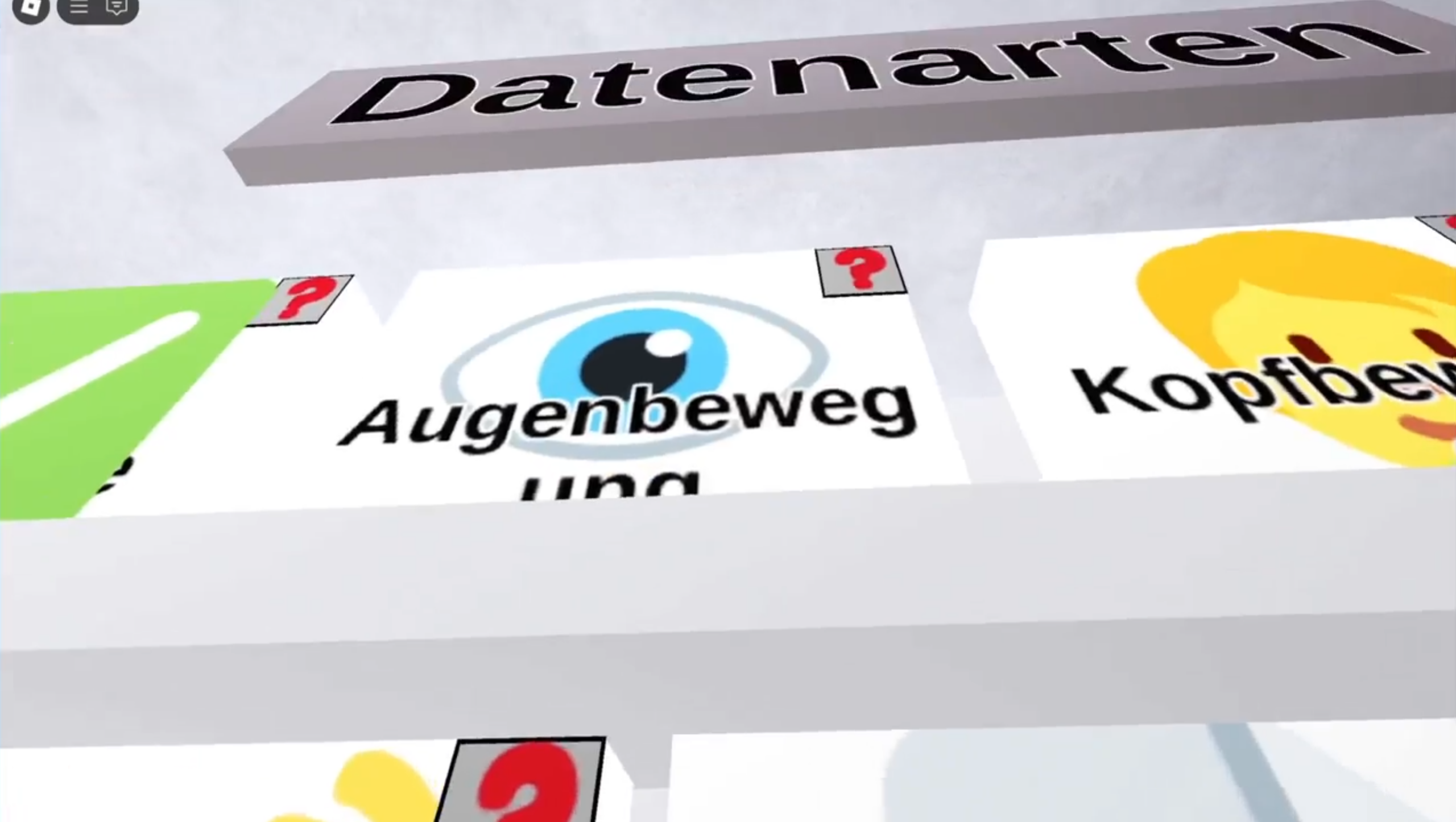
Many users are unaware of when data is being collected, which sensors are involved, or what additional information can be derived from linking different data sources. There is also a lack of simple ways to specifically control, restrict or, depending on the situation, deactivate data collection by individual sensors.
Design proposal ‘User-controlled data collection via sensors’
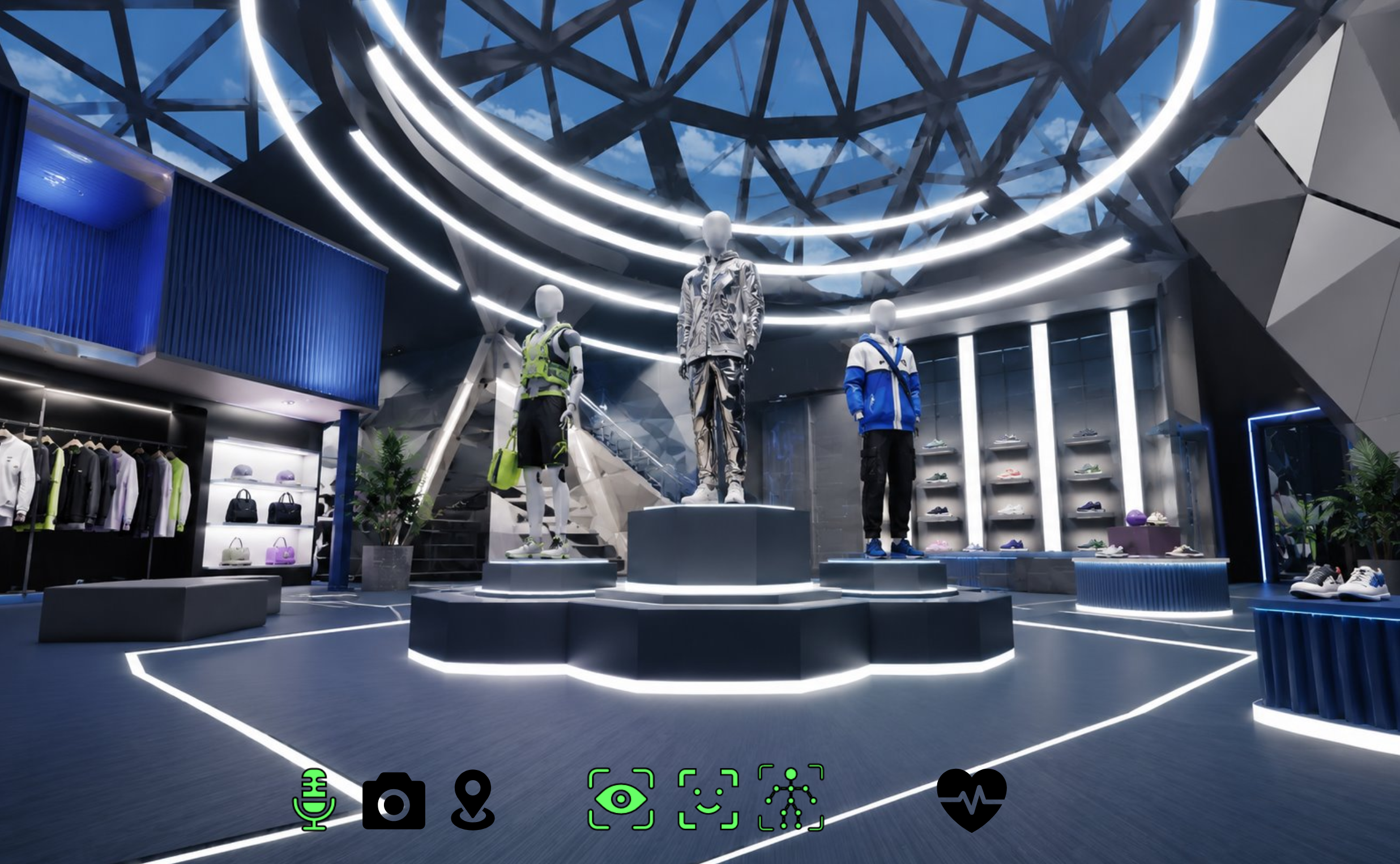
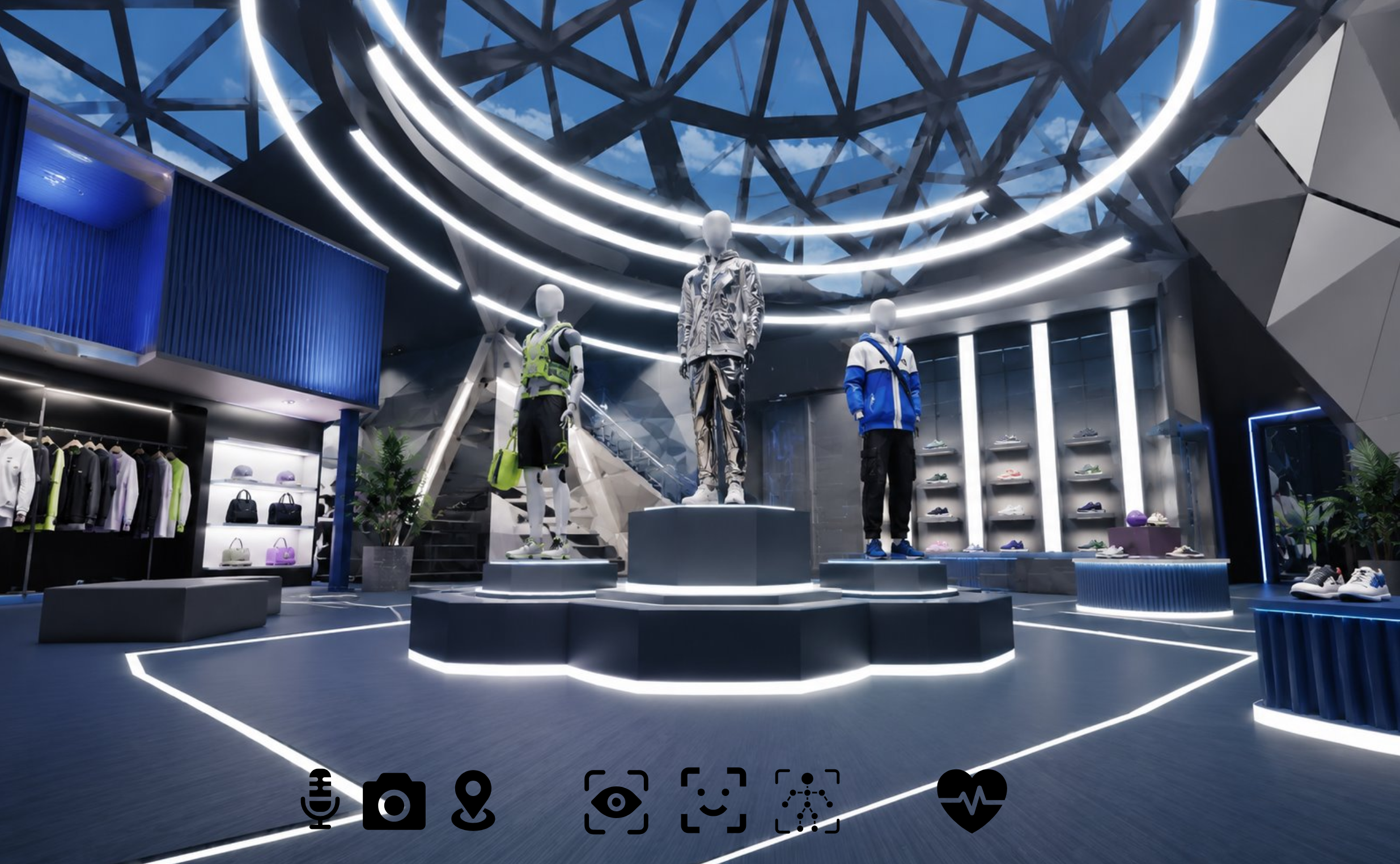
Platforms offer users setting options for physical and virtual sensors (e.g. microphone, camera, body movement, eye tracking). This allows users to independently determine which sensors are activated or deactivated for functionality and data collection, thereby enabling them to specifically control the data collection themselves.
Problem: opaque and disruptive consent processes
Users in the metaverse are often faced with complex and repetitive consent processes. This makes it difficult to make transparent and autonomous decisions about which personal data is collected, processed or shared. Traditional consent mechanisms from the web can only be applied to immersive virtual environments to a limited extent, as constant prompts interrupt the user experience. At the same time, gestures, facial expressions and other physical interactions give rise to new forms of consent, the meaning of which often remains unclear. Added to this are risks arising from manipulative design, social pressure and a lack of transparent, cross-platform data protection controls.
Design proposal ‘Virtual Consent Assistant’
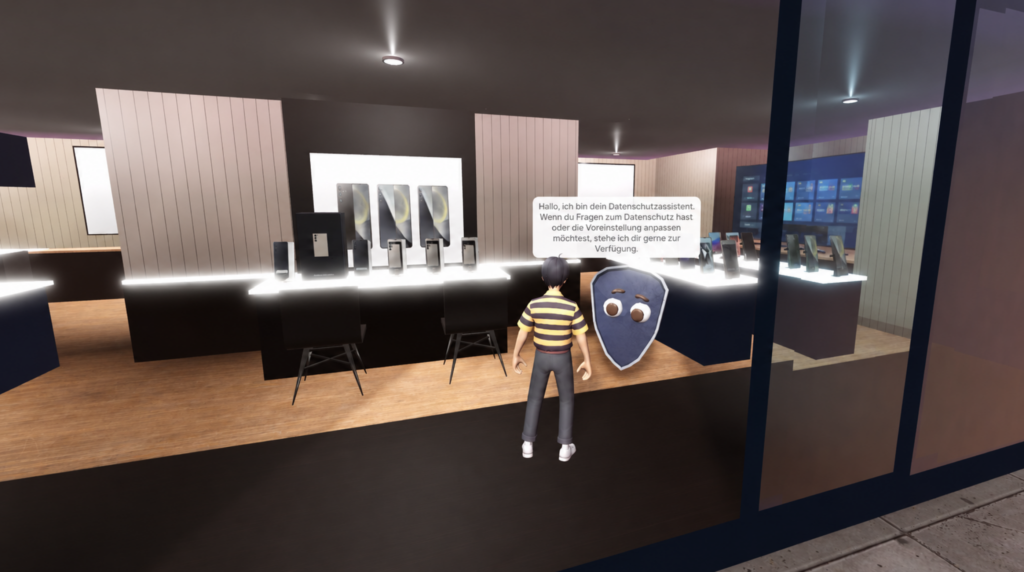
The metaverse enables interactive consent processes, for example through the use of consent assistants that can explain content clearly and answer any questions users may have. The options presented for decisions (consent or no consent to data collection) should be designed to be as neutral as possible, without any influence from nudges, so that users can make informed decisions independently and autonomously. The decision regarding consent can be communicated in various ways, e.g. through a natural conversation or by performing a specific movement. Consent assistants can be designed to be context-sensitive, so that they blend seamlessly into the respective environment and do not stand out in a distracting manner (e.g. in the form of a dumbbell in a virtual sports context or in the form of a mobile phone in a virtual electronics shop).
Design proposal ‘PIMS pre-consent’

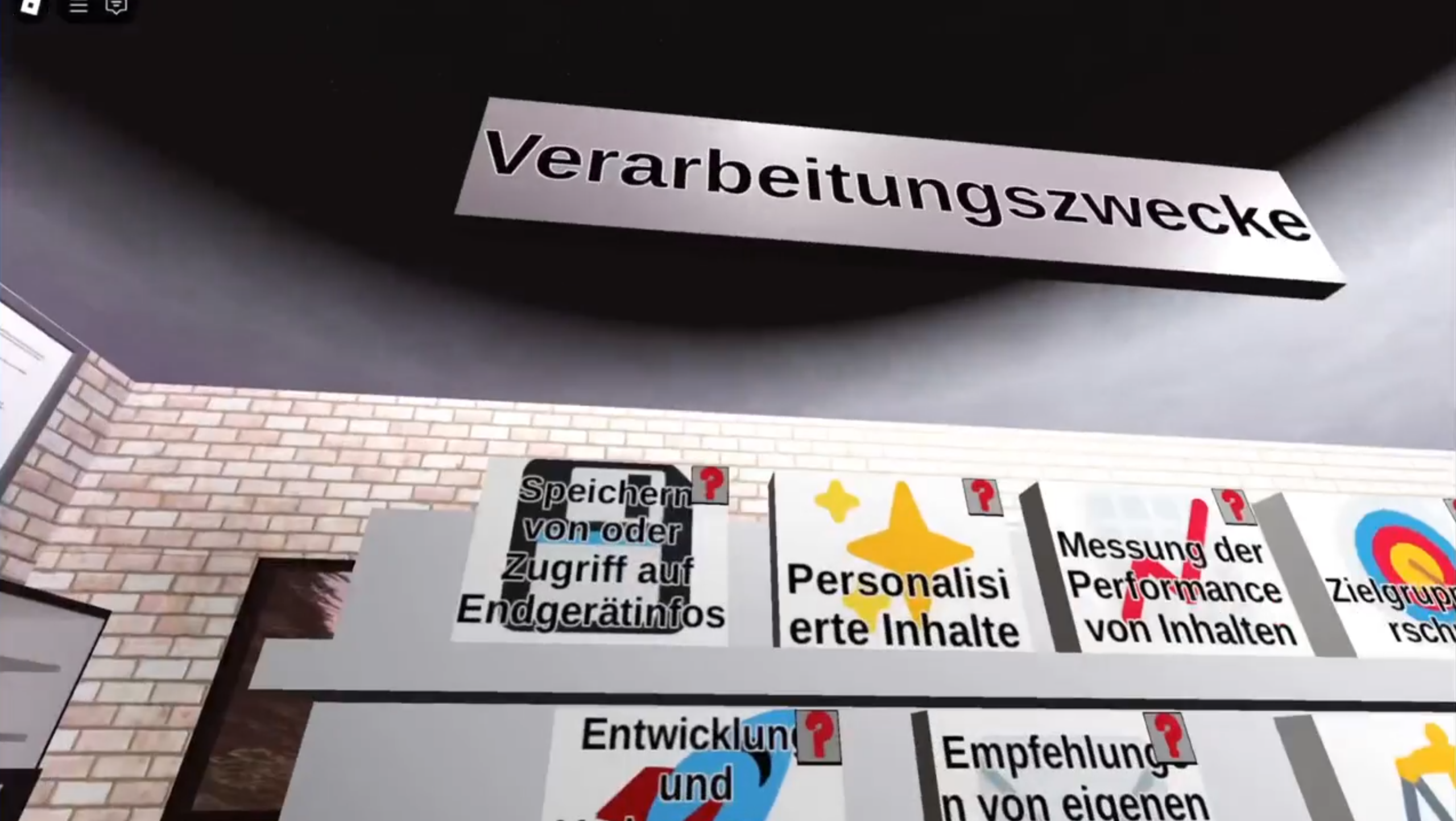
Platforms can support the consent process through an advanced overall setup using so-called PIMS (Personal Information Management Systems). When users first access the platform, they are requested to configure their privacy settings in advance. This includes, amongst other things, specifying which data may be collected, how it may be processed, with which (including foreign) companies data may be shared, and for what purposes it may be disclosed. This initial, comprehensive configuration facilitates subsequent, context-specific decisions regarding individual consents and spares users the need to deal with a multitude of individual consents when interacting with different providers in the metaverse. Provided that the privacy settings chosen at the outset are compatible with the respective usage context, the user can use the platform without restriction for the relevant purpose. Otherwise, access or use is restricted, and options are displayed to adjust the privacy settings accordingly.
Problem: harassment and virtual abuse
Users in the metaverse may be subjected to harassing, intrusive or threatening interactions by other users. Unlike traditional online platforms, immersive technologies, avatar embodiment, synchronous voice chat and realistic movement and interaction options create particularly intense experiences, which those affected often perceive as having an immediate physical and emotional impact. Virtual harassment can therefore be significantly more distressing and harder to ignore than on traditional social media. Particularly when combined with haptic feedback or body-worn sensors, virtual assaults can be experienced as particularly realistic and cause psychological distress.
Design Proposal 'Blocking'
Platforms should provide users with protective measures that enable them to reliably protect themselves from threats posed by other users at any time. By means of corresponding features, users must be capable of effectively stopping acute and harmful interactions (via text, voice, avatar movements or system exploits) by other users.
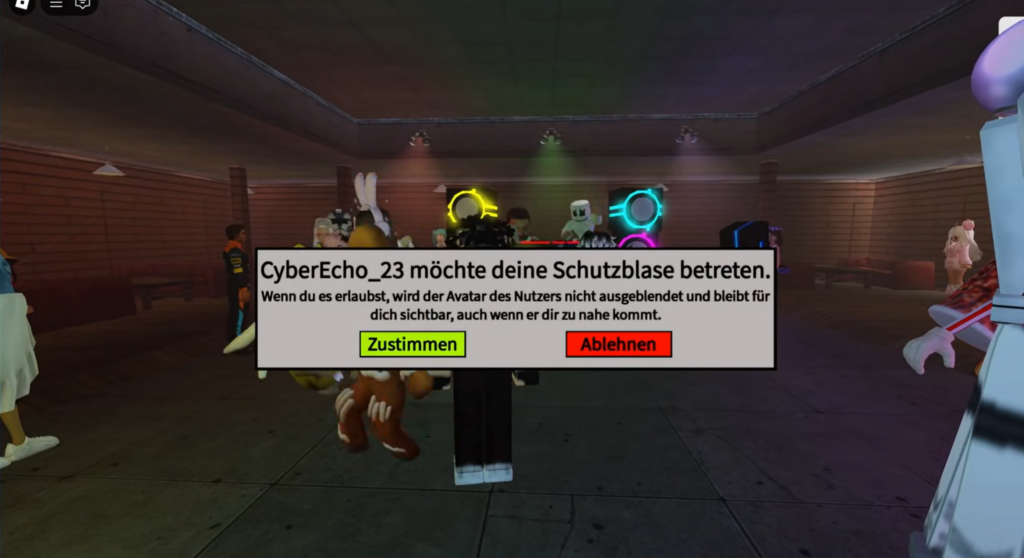
Design Proposal 'Safety Bubble'
Platforms should provide users with protective measures that enable them to protect themselves preventively against potential harassment, for instance, through the possibility of restricting interactions with unknown users.
Problem: misleading and manipulative behaviour by social bots
Users in the metaverse are often unable to tell whether they are interacting with real people or AI-controlled avatars and social bots. If users mistakenly assume they are interacting with humans, when in fact an avatar is computer-generated, this undermines trust in the authenticity of virtual encounters. Furthermore, this gives rise to risks of deception, manipulation and covert influence, for example on opinions, relationships or purchasing decisions.
Design Proposal 'Labeling of Social Bots'
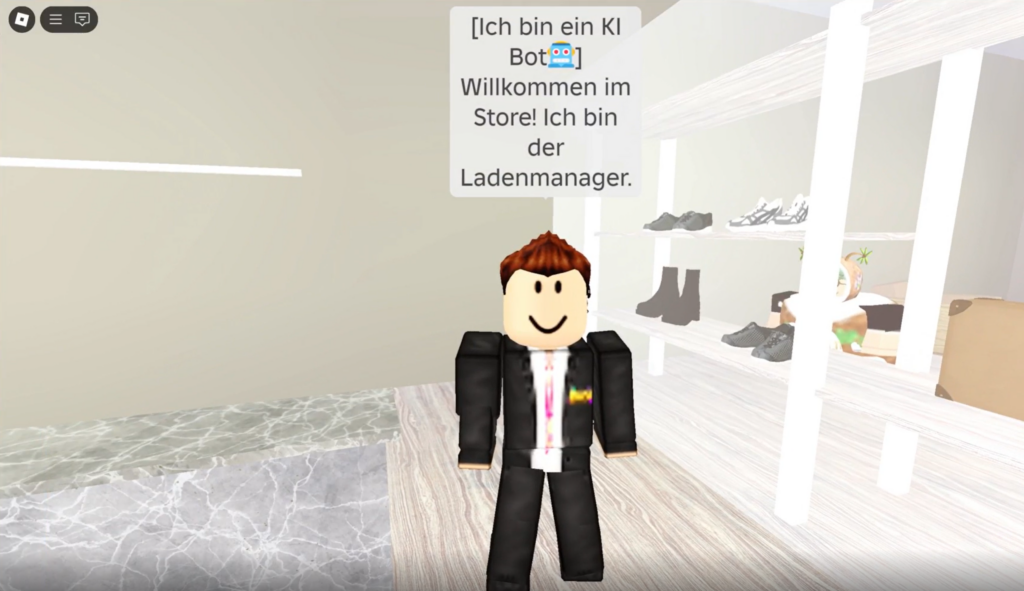
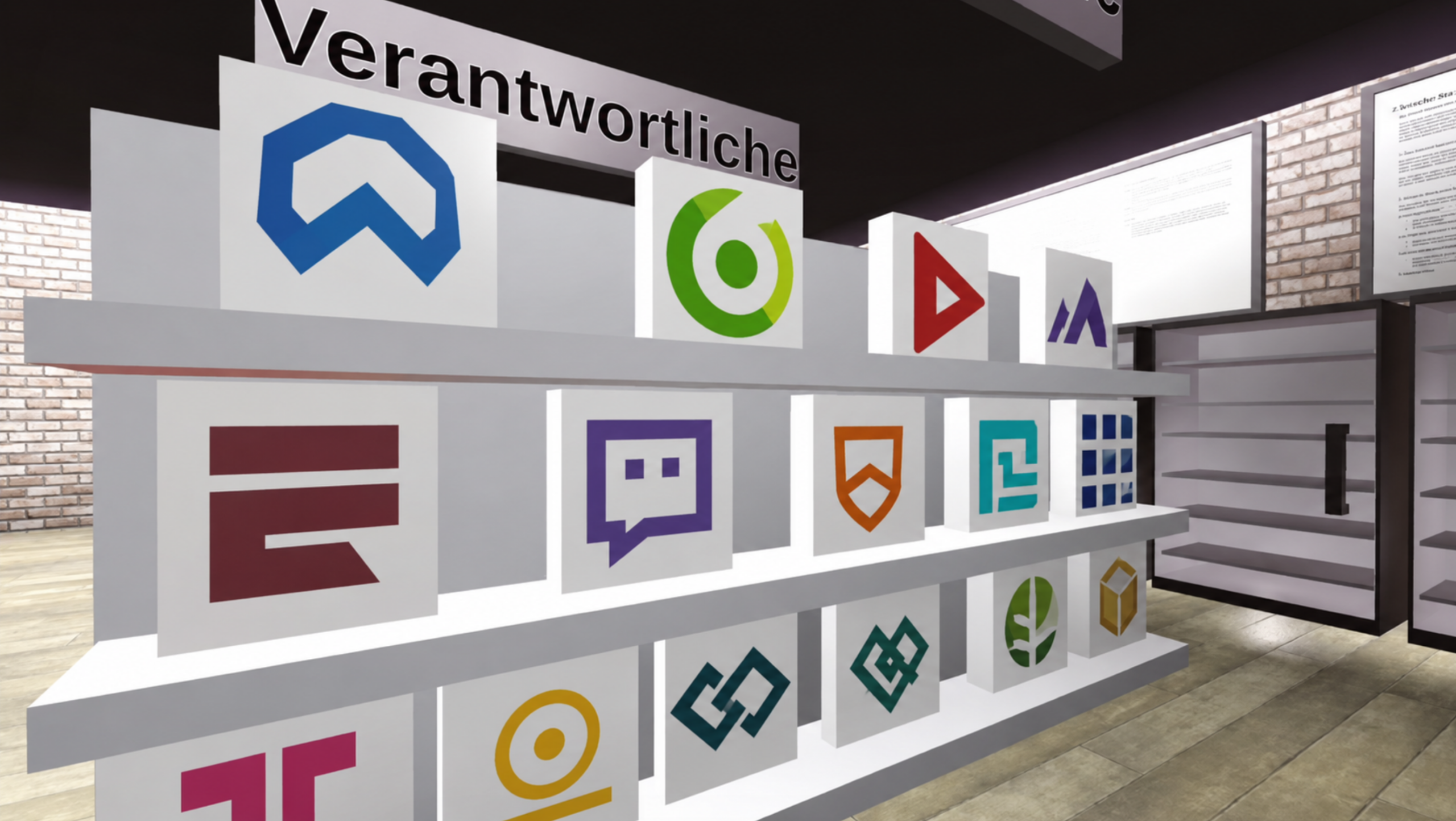
If social bots are deployed on platforms, they should be clearly labeled so that it is readily apparent to users that these are computer-controlled avatars rather than human beings. The bots should be labeled prior to any interaction, ensuring that users are informed in advance that they are interacting with a bot. Furthermore, transparent information regarding data processing shall be provided, particularly concerning data collection, data storage and the data processors involved, as well as the AI systems used, including their functionality and deployment objectives.
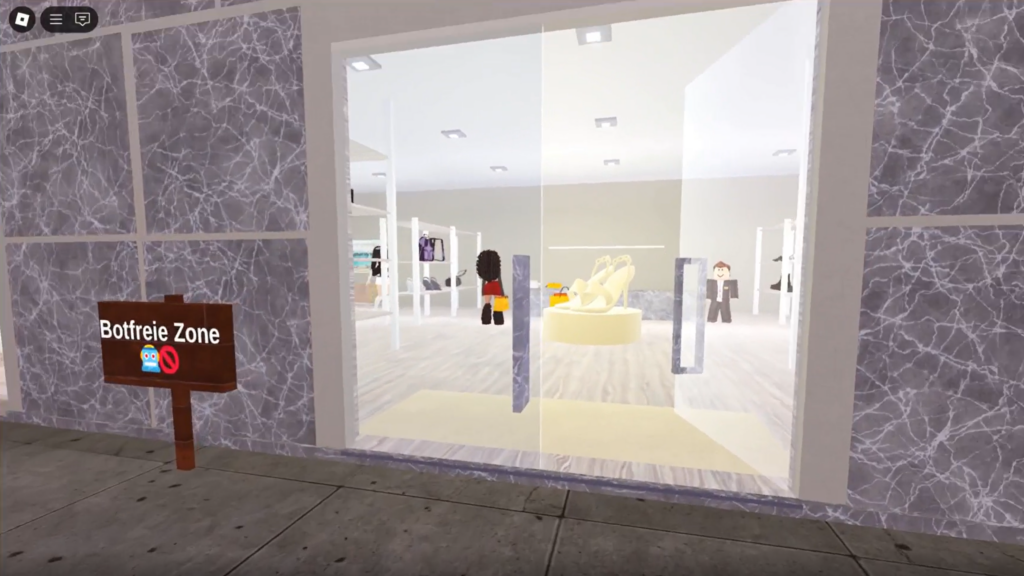
Design Proposal 'Bot-free zones'
Where social bots are used on platforms, areas should be created to which bots do not have access. These should also be clearly labelled so that they can be recognised. This ensures that genuine user interactions are preserved and that users do not have to worry that these will be compromised by bots.